Head office: 316 Le Van Sy, Tan Son Hoa Ward, Ho Chi Minh City, Vietnam
 Hotline : 0911 888 247 - 0888 999 247
 Email : info@247power.vn


Building a generator room is essential to keep it looking good and to reduce noise and exhaust when the equipment runs. The room can be in the basement or technical floor of high-rise buildings and apartment blocks, or built outside the building or in the workshop, depending on the scale and nature of the project.
Building a generator room needs careful calculation so that it fits the building structure and makes cable routing and connection to other systems easy. Moving the generator into the room, and its servicing and repair, need advice from a design engineer to keep the project complete as a whole.
To build a generator room, the basic information needed is: the generator's capacity, the dimensions of the set, and the plan for moving the generator into the room.
I. DESIGN BASIS
The design dossier is prepared on the following basis:
The architectural design dossier of the building.
Design standards and codes:
Vietnam Building Code
II. STANDARDS AND TECHNICAL SOLUTIONS
1. Generator room dimensions:
Room width = generator width + the clearance on both sides between the generator and the walls (at least 800 mm each side).
If the room also holds a backup fuel tank or other cabinets, add the width of the backup tank + cabinets or other equipment.
Room length = generator length + length of the air-out and air-in attenuators + length of the air exhaust hood + at least 1,000 mm clearance.
If the room also holds a backup fuel tank or other cabinets, add the length of the backup tank + cabinets or other equipment.
Room height = generator height + height of the silencer and chimney + at least 1,000 mm clearance.
2. Generator base and vibration damping
Small generators do not need a base, but larger generators can have a base or additional damping springs to bear the force of the generator on the floor and ensure operation.
Build the generator base from reinforced concrete, 10 cm – 30 cm thick, 10 – 50 cm larger than the overall size of the generator on each side so damping springs can be fitted or there is room to stand and operate.
Fitting damping springs for large generators reduces the vibration the set transmits directly to the floor when running; the springs must be chosen so that their total load capacity is always twice the generator's weight (for example, an 1100 kVA generator weighs 8 tonnes, so we fit a total of 8 damping springs – 4 on each side – and each spring must carry at least 2 tonnes).
3. Generator room sound attenuation system
For projects near residential areas, crowded places, hospitals and schools, the generator's noise level must be low to avoid noise pollution. So noise control (soundproofing) is needed for the generator room, by building a sound attenuation system for the room or fitting silencers to the generator.
The noise level normally required in Vietnam is
The room sound attenuation system consists of:
Wall and ceiling attenuation: made of a steel frame, glass wool of 80–100 kg/m3 density, fire-resistant fabric covering and perforated sheet. Attenuation thickness 80–100 mm.
Air-in and air-out attenuation blocks: made of materials similar to the wall and ceiling attenuation, assembled into interleaved blocks to reduce incoming air noise. The air-in block's area is 1.3–1.5 times the radiator area; the air-out block's area is 1.1–1.3 times the radiator area.
Primary and secondary silencers: steel outside; the primary silencer contains glass wool of 80–100 kg/m3 density, covered with fire-resistant fabric and perforated sheet. The secondary silencer contains interleaved tubes inside.
Air-in and air-out louvers: made of steel welded into blocks forming louver blades, with stainless steel rat-proof mesh. Their purpose is to draw in outside air and discharge hot air.
4. Fuel supply system
For small generators, the diesel tank is usually built into the generator's chassis and allows the set to run at 100% load for 5–12 hours. But large industrial generators usually have no diesel tank attached, because these sets are large and building a diesel tank under the chassis would increase the size and weight of the set, making it very hard to move.
Depending on the generator's capacity and fuel consumption, the tank volume is calculated. There are usually 2 fuel supply systems as follows.
Fuel supply system with only 1 tank: for this system we only need to connect the fuel pipes, shut-off valves and a dipstick. The engine draws fuel automatically to run, with no pump system needed.
Fuel supply system with 2 or more tanks: here we need an automatic pump system to feed fuel from the reserve tank to the day tank.
5. Exhaust system
Like the room's sound attenuation system, the exhaust system must also meet standards to reduce the polluting gas released into the environment. So an exhaust system must be added to meet environmental standards.
The exhaust system consists of the flue pipes and a smoke filter.
Flue pipes: made of galvanized steel pipe insulated with glass wool of 80–100 kg/m3, clad outside with stainless steel. Or stainless steel pipes.
Smoke filter: ensures the exhaust from the engine is not black and the concentration of harmful gases is within the permitted range of the criteria above.
The exhaust filter is made of T304 stainless steel, which gives the equipment a long service life.
6. Generator room earthing
Two earthing systems are installed in the generator room:
Earthing system for the generator neutral
Safety earthing system for the transformer casing, low-voltage cabinet casing and other electrical equipment casings
The generator station earthing system consists of earthing plates and earthing wires.
All generator neutrals, casings, supports, low-voltage cabinets, steel entrance doors and steel materials are connected to the earthing system.
7. Generator room lighting
The generator station room is designed with lighting and power sockets. The lighting is controlled by switches at the entrance.
The lighting must give enough brightness for operation, maintenance and servicing, with no dark spots.
8. Fire and explosion protection
A fire extinguisher must be provided in the equipment room.
If you need Design, Construction and Installation of a Generator Room, please Contact us with us for detailed advice and the most cost-effective solution – 0911888247, 0888999247
You may also be interested in
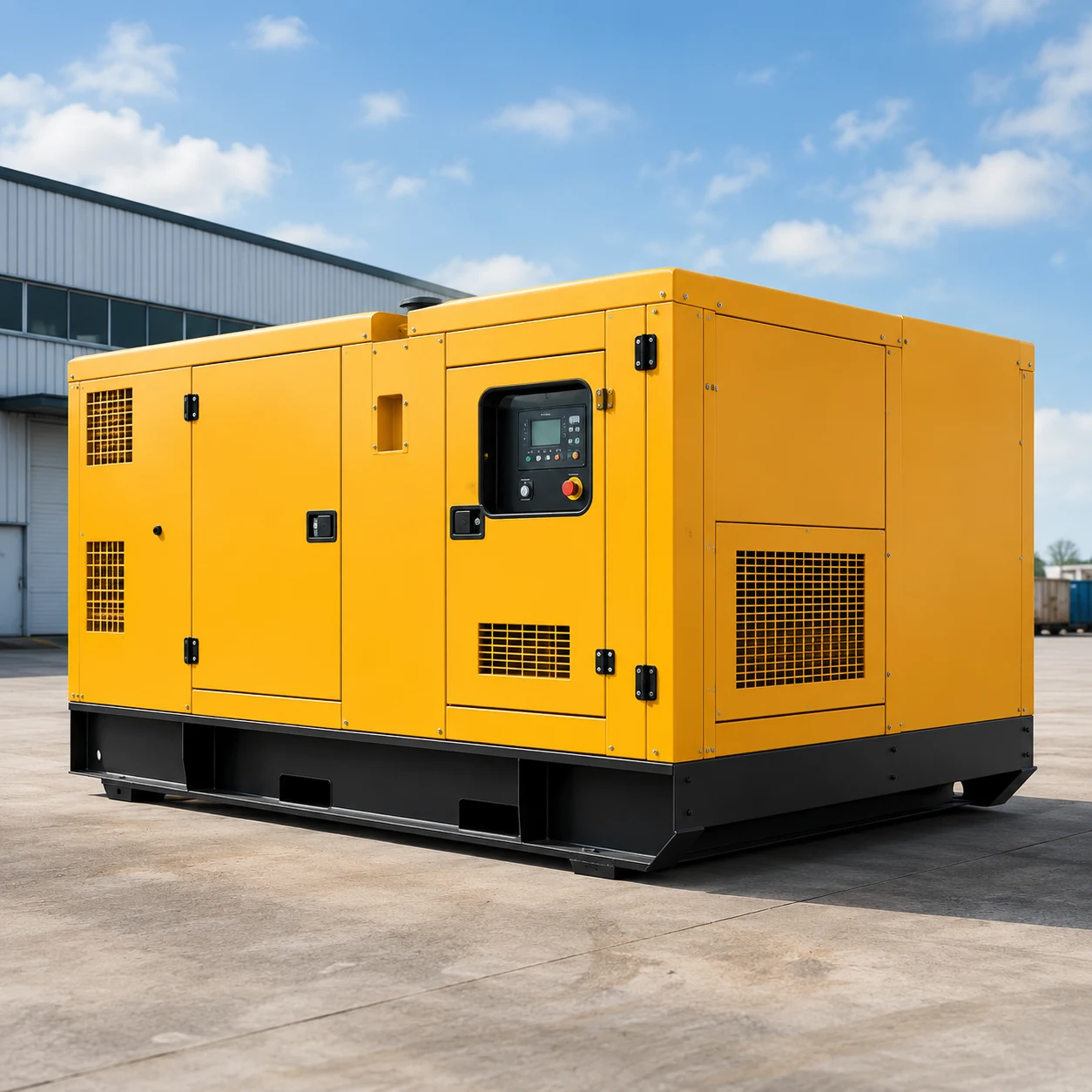
Generator rental
To ensure continuity in business, production, events...
Read more about Generator rental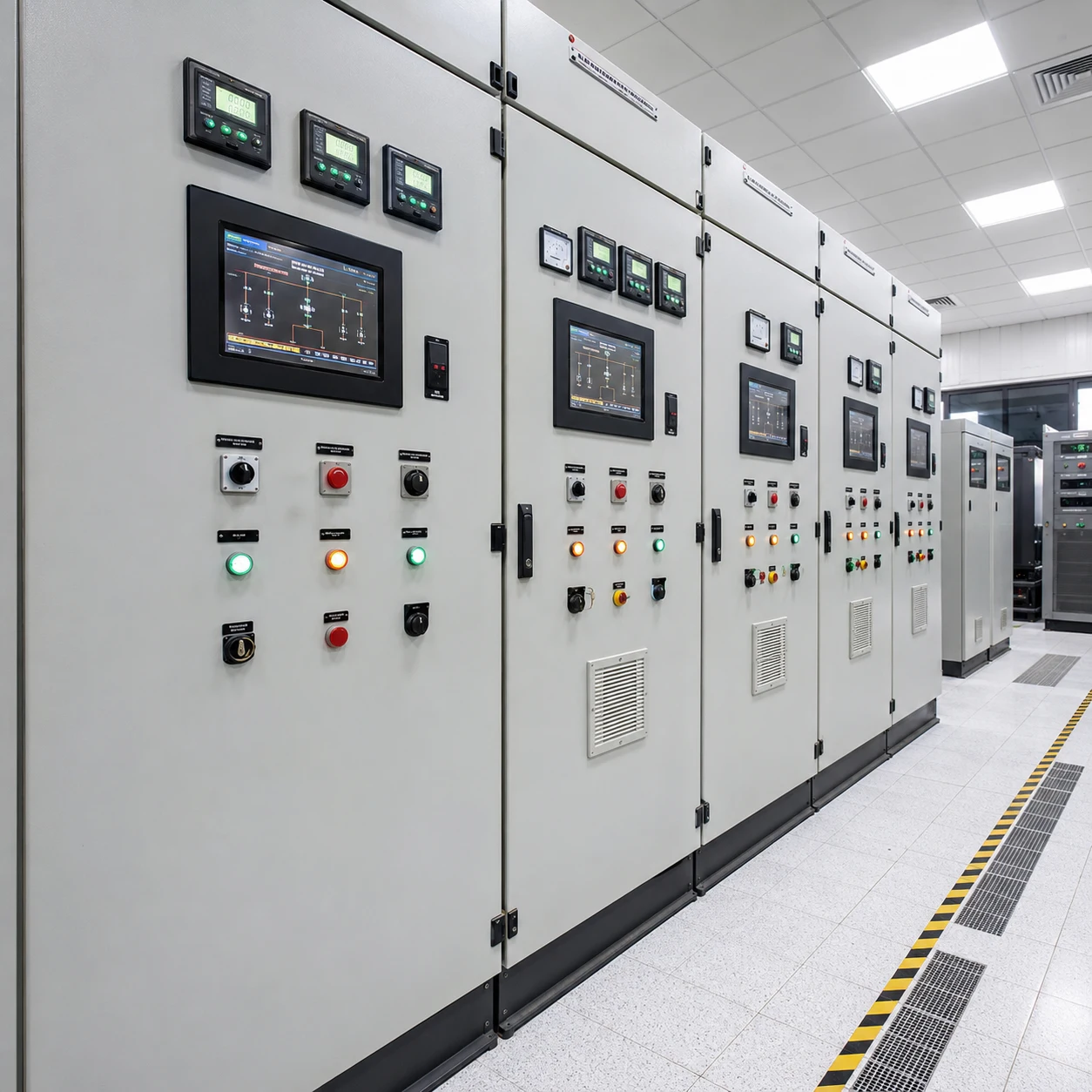
Generator Synchronization
Synchronizing generators means connecting generators in parallel...
Read more about Generator Synchronization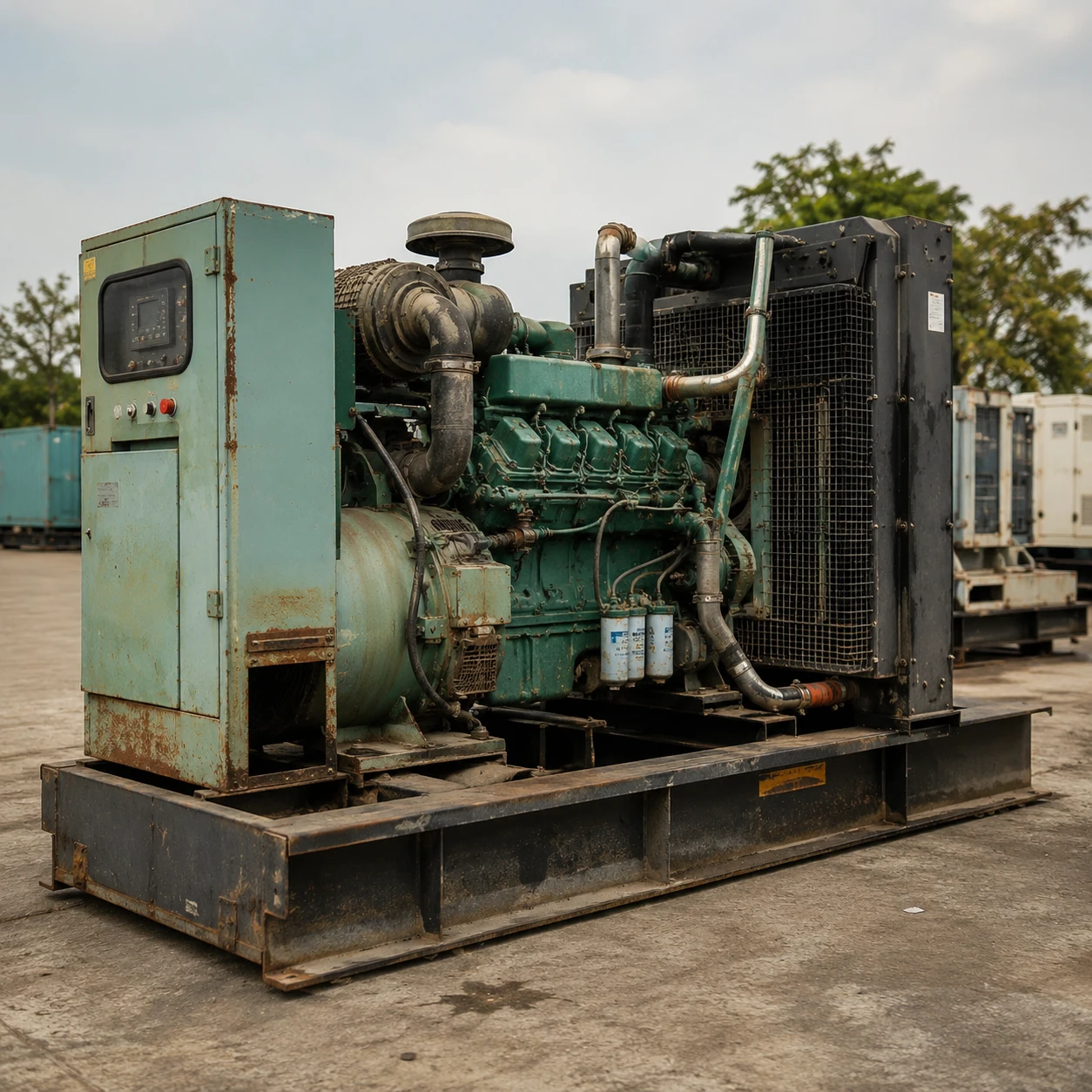
Used & Surplus Generator Buy-back
Disposing of old generators is a regular activity for every business,...
Read more about Used & Surplus Generator Buy-back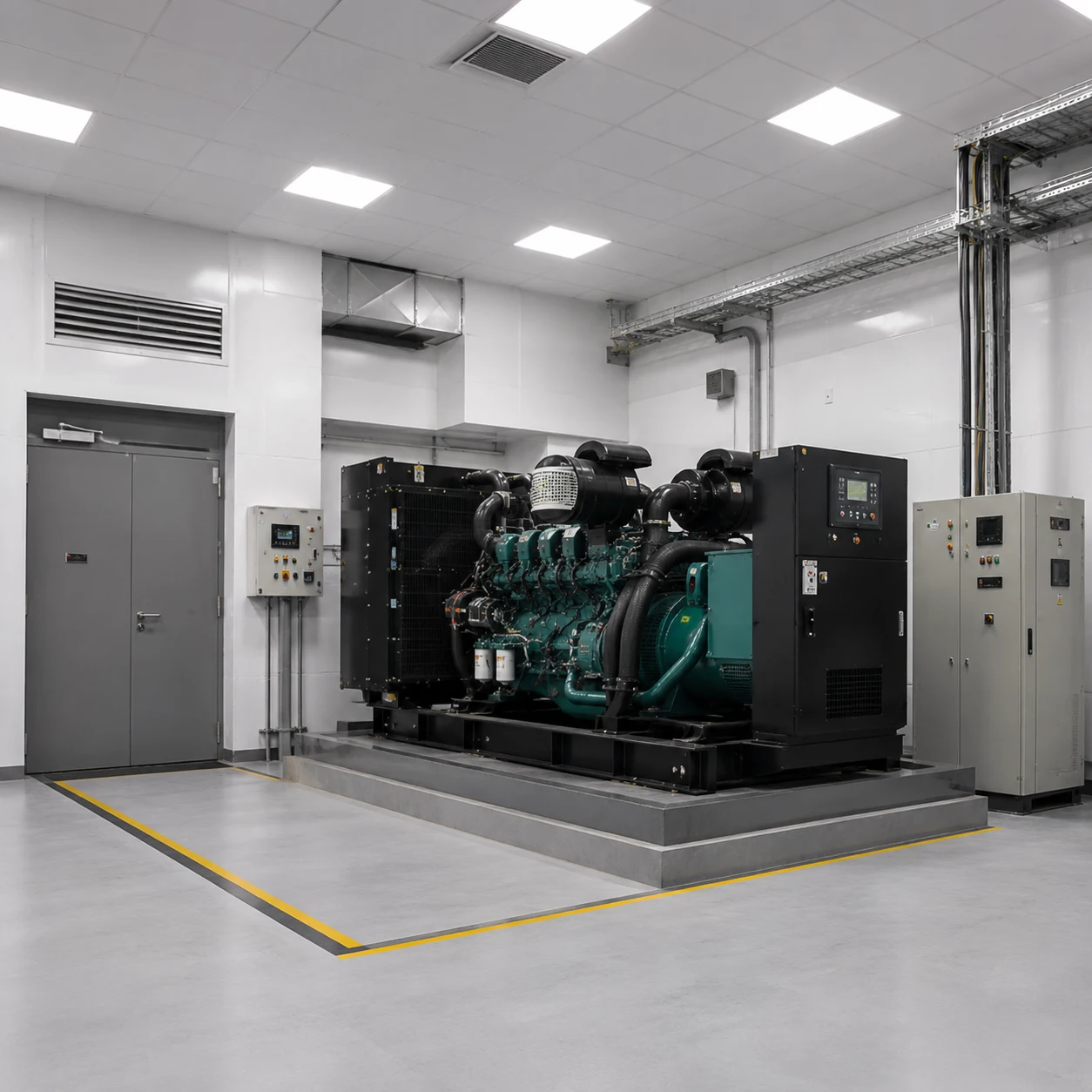
Generator Consulting, Design & Installation
Building a generator room is essential to ensure...
Read more about Generator Consulting, Design & Installation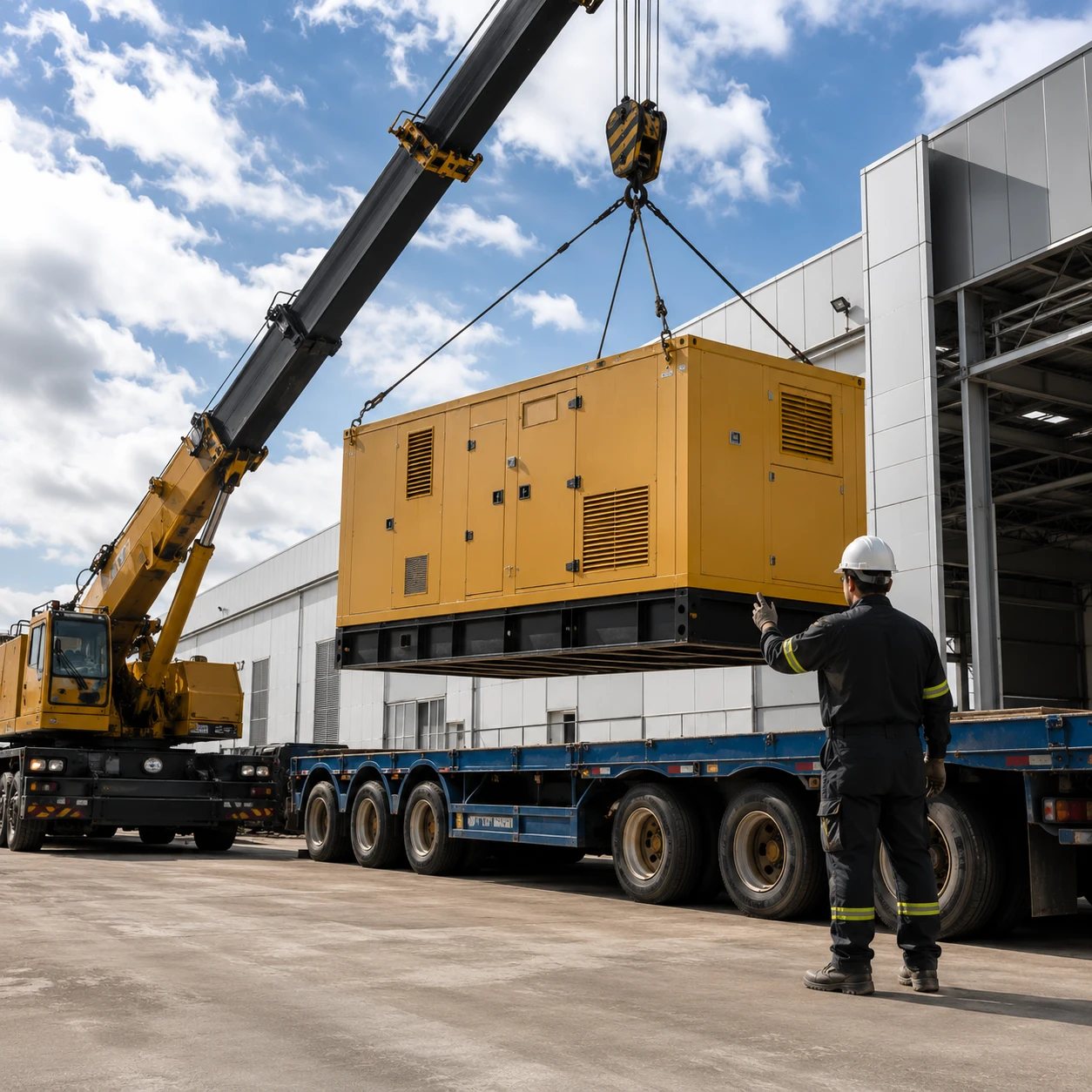
Generator Installation
With a professional team and many years of experience in installing and relocating...
Read more about Generator Installation
Generator repair
Alongside investing in generators for production...
Read more about Generator repair
Generator Maintenance
With the investment in a standby generator for production work...
Read more about Generator Maintenance
Load Bank Rental for Generator Testing
When we intend to buy a generator for use, besides...
Read more about Load Bank Rental for Generator Testing